

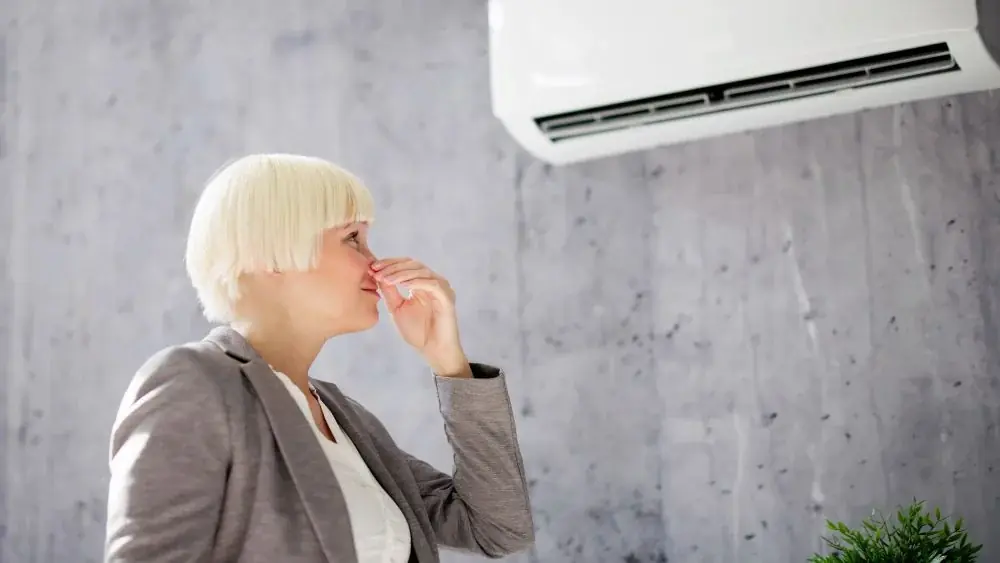
Why Does My AC Smell Weird When I Turn It On?
Your AC smells weird when you turn it on because of mold, mildew, bacteria growth, burning electrical components, gas leaks, or dead animals in the system. These odors happen when moisture builds up in your air conditioner or when parts wear out. Most AC smells can be fixed by cleaning your system, changing filters, or having a professional check for serious issues like gas leaks or electrical problems.
Common AC Smells and What They Mean
Different AC smells can tell you what’s wrong with your system. Let’s look at the most common odors and what they mean.
Musty or Moldy Smell
A musty smell like wet socks or a damp basement is the most common AC odor. This smell means mold or mildew is growing in your air conditioner. When your AC sits unused, moisture builds up in the dark parts of the system. This creates the perfect place for mold to grow. When you turn on your AC, it blows air over these moldy areas and spreads the smell through your home.
Burning or Electrical Smell
A burning smell from your AC is a warning sign. It often means an electrical part is overheating or burning. This could be a motor, wire, or circuit board. New units might have a brief burning smell as factory coatings burn off. But if the smell lasts more than an hour or comes from an older unit, turn off your AC right away and call a professional.
Rotten Egg Smell
If your AC smells like rotten eggs, the issue likely isn’t the AC itself. It could be a natural gas leak from another nearby appliance, like a furnace or gas line. Natural gas has a sulfur-like smell added to help detect leaks. If you notice this odor, open the windows, evacuate your home, and call your gas provider or emergency services immediately. Gas leaks are extremely dangerous and should never be ignored.
Dead Animal Smell
A strong, rotting smell might mean a small animal, like a mouse or bird, got into your AC system and died. Animals sometimes crawl into AC units for warmth and get trapped. The smell will be strongest when the AC runs because it pushes air over the dead animal. You’ll need a professional to remove the animal safely.
Vinegar or Chemical Smell
A vinegar smell often means bacteria are growing in your AC. The smell can also come from an electric motor overheating or a refrigerant leak. Some people describe this as a sweet or chemical smell. If it’s strong or doesn’t go away after cleaning your system, call a professional.
Car Exhaust Smell
If your AC smells like car exhaust, you might have a refrigerant leak. The chemicals in refrigerant can smell like exhaust fumes. This is serious because refrigerant is harmful to breathe and bad for the environment. Turn off your AC and call a professional right away.
What Causes AC Odors?
Understanding why your AC smells bad helps you fix the problem. Here are the main causes of AC odors.
Moisture and Mold Growth
Your AC removes moisture from the air as it cools your home. This moisture can collect in the unit, especially in the drain pan and evaporator coil. If the water doesn’t drain properly, mold and mildew grow. The dark, damp conditions inside your AC are perfect for mold. When you turn on your AC, air blows over these moldy areas and carries the smell into your home.
Dirty Air Filters
Air filters trap dust, pollen, and other particles. When filters get clogged, air can’t flow properly. Dust and dirt build up in your system. This creates a musty smell and can lead to mold growth. Dirty filters also make your AC work harder, which can cause parts to overheat and create burning smells.
Electrical Issues
Electrical problems like loose wires, worn-out motors, or damaged circuit boards can create burning smells. When electrical parts get too hot, their plastic coatings can melt and smell bad. This is a serious issue that needs professional attention to prevent fires.
Refrigerant Leaks
Refrigerant is the chemical that cools the air in your AC. If pipes crack or connections loosen, refrigerant can leak out. This creates a sweet, chemical smell or an odor like car exhaust. Refrigerant leaks reduce your AC’s cooling power and can harm your health and the environment.
Dead Animals
Small animals like mice, birds, or lizards sometimes get into outdoor AC units looking for shelter. If they can’t get out, they may die inside. As the animal decomposes, it creates a strong, rotting smell that comes through your vents. This requires professional removal to prevent health hazards.
Clogged Drain Lines
Your AC has a drain line that removes the water it collects from the air. If this line gets clogged with dirt, algae, or mold, water backs up in your system. This standing water creates musty smells and allows mold to grow. A clogged drain can also damage your AC and your home if water overflows.
Health Risks of Smelly Air Conditioners
A smelly AC isn’t just unpleasant—it can affect your health. Here’s how different AC odors might impact your well-being.
Respiratory Problems
Mold and bacteria in your AC can trigger breathing problems. When your AC blows air over moldy areas, it sends mold spores into your home. Breathing these spores can cause coughing, wheezing, and shortness of breath. People with asthma or allergies may have worse symptoms. Long-term mold exposure can lead to chronic respiratory conditions.
Allergic Reactions
Mold, bacteria, and dust in your AC can trigger allergic reactions. Symptoms include sneezing, a runny nose, itchy eyes, and skin rashes. You might notice these symptoms get worse when your AC runs. If your allergies seem worse at home than elsewhere, your AC might be the cause.
Headaches and Dizziness
Chemical smells from refrigerant leaks or burning electrical components can cause headaches and dizziness. These chemicals can irritate your eyes, nose, and throat. In serious cases, they can make you feel lightheaded or nauseous. If you notice these symptoms when your AC runs, turn it off and get fresh air.
Carbon Monoxide Concerns
While rare in AC systems, some heating systems connected to your AC can produce carbon monoxide if they malfunction. Carbon monoxide is odorless but very dangerous. That’s why it’s important to have carbon monoxide detectors in your home and get regular HVAC maintenance.
Long-term Health Effects
Living with a smelly AC for a long time can lead to chronic health issues. Constant exposure to mold can weaken your immune system. Breathing chemical fumes can damage your lungs. The stress of dealing with unpleasant odors can affect your mental health, too. Fixing AC odors promptly protects your long-term health.
DIY Solutions for Smelly Air Conditioners
You can fix many AC odor problems yourself. Here are some DIY solutions to try before calling a professional.
Changing Air Filters
The easiest fix for a smelly AC is changing the air filter. Filters should be changed every 1-3 months, depending on your home. To change the filter:
- Turn off your AC system
- Locate the filter (usually in the return air duct or at the indoor unit)
- Remove the old filter
- Note the size and type needed
- Insert the new filter, making sure the arrow points toward the unit
A clean filter improves air quality and helps your AC run better.
Cleaning the Condensate Drain Line
A clogged drain line causes musty smells. Here’s how to clean it:
- Turn off your AC
- Find the drain line (usually a PVC pipe near your outdoor unit)
- Pour 1 cup of white vinegar or bleach into the drain line
- Let it sit for 30 minutes
- Flush with water
Do this every few months to prevent clogs and odors.
Cleaning the Evaporator Coils
Dirty evaporator coils can cause bad smells. To clean them:
- Turn off your AC
- Remove the access panel to the indoor unit
- Spray coil cleaner on the coils (available at hardware stores)
- Let it sit for the time recommended on the product
- Rinse gently with water (use a spray bottle to avoid soaking the unit)
Be careful not to bend the coils, as they’re delicate.
Using Odor Eliminators
Some products can help reduce AC odors:
- Baking soda: Place open containers near vents to absorb odors
- Activated charcoal: Works like baking soda but is stronger
- Commercial odor eliminators: Follow product instructions
These help with mild odors but won’t fix the underlying problem.
Regular Maintenance Schedule
Prevent smells with regular maintenance:
- Change filters every 1-3 months
- Clean drain lines every 3 months
- Check for water leaks monthly
- Clean vents and registers every 6 months
- Schedule professional maintenance yearly
Regular care prevents most AC odor problems.
When to Call a Professional
Some AC odor problems need expert help. Here’s when to call a professional.
Signs of Serious Problems
Call a professional immediately if you notice:
- Burning smells that don’t go away quickly
- Rotten egg or gas smells
- Chemical or sweet smells that might be refrigerant
- Smoke coming from any part of your AC
- Strange noises along with bad smells
- Water leaking from your indoor unit
These signs point to serious issues that need expert attention.
What to Expect from Professional Service
When you call an HVAC professional, they will:
- Inspect your entire AC system
- Test electrical components
- Check refrigerant levels
- Clean parts that are hard to reach
- Identify and remove any dead animals
- Fix leaks or damaged components
- Recommend preventive measures
A thorough service call takes 1-2 hours and solves most odor problems.
Cost Considerations
Professional AC service costs vary:
- Basic maintenance: $75-$200
- Drain line cleaning: $75-$250
- Mold removal: $150-$500
- Electrical repairs: $150-$650
- Refrigerant leaks: $200-$1,500
- Dead animal removal: $150-$250
The cost depends on your location and the problem’s severity. Many companies offer maintenance plans that save money over time.
Finding a Reliable HVAC Technician
To find a good HVAC professional:
- Ask friends and family for recommendations
- Check online reviews
- Verify licenses and insurance
- Get multiple quotes
- Ask about warranties on work
- Choose companies with experience with your AC brand
A good technician fixes the current problem and helps prevent future issues.
How to Prevent AC Odors
Preventing AC odors is easier and cheaper than fixing them. Here’s how to keep your AC smelling fresh.
Regular Filter Changes
The simplest prevention is changing your air filter regularly. Set a reminder to check your filter monthly and change it when it looks dirty. Use high-quality filters that catch more particles. This prevents dust buildup that leads to odors and keeps your system running efficiently.
Scheduled Professional Maintenance
Have your AC professionally serviced once a year, ideally before summer. During maintenance, technicians will:
- Clean all components
- Check electrical connections
- Test refrigerant levels
- Clear drain lines
- Identify potential problems early
Annual maintenance prevents most odor issues and extends your AC’s life.
Controlling Home Humidity
High humidity leads to mold growth. Keep your home’s humidity between 30-50% to prevent mold:
- Use bathroom and kitchen exhaust fans
- Fix water leaks promptly
- Consider a whole-home dehumidifier
- Don’t turn your AC off for long periods in humid weather
Lower humidity means less chance of mold and musty smells.
Keeping Vents and Ducts Clean
Clean vents and registers regularly with a vacuum and a damp cloth. Consider professional duct cleaning every 3-5 years, especially if:
- You have pets
- Someone in your home has allergies
- You’ve had mold problems before
- You’ve recently renovated your home
Clean ducts prevent odors from spreading through your home.
Protecting Outdoor Units
Prevent animals from entering your outdoor unit:
- Keep the area around the unit clear
- Trim bushes and plants at least 2 feet back
- Consider an AC cover during off-seasons (remove before use)
- Check for and seal any holes or gaps
These steps prevent dead animal odors and keep your system running properly.
Frequently Asked Questions
Is it normal for my AC to smell when I first turn it on?
A slight musty smell when you first turn on your AC after a long break is normal. This happens because dust has settled in the system. The smell should go away within a few hours. If it persists or is very strong, you may have a mold problem that needs attention.
Can a smelly AC make me sick?
Yes, a smelly AC can make you sick. Mold and bacteria in your AC can cause respiratory problems, allergic reactions, and headaches. Chemical smells from refrigerant leaks or burning components can cause dizziness and nausea. If you notice health symptoms that improve when you leave home, your AC might be the cause.
How often should I change my AC filter?
You should check your AC filter monthly and change it every 1-3 months. Change it more often if you have pets, allergies, or live in a dusty area. Some high-efficiency filters can last up to 6 months, but check the manufacturer’s recommendations. Regular filter changes prevent most AC odor problems.
Why does my AC smell like vinegar?
An AC that smells like vinegar usually has bacteria growing in the system. The bacteria produce acetic acid, which smells like vinegar. This happens when moisture builds up in your AC. Clean your system, especially the drain pan and evaporator coil, to remove the bacteria. If the smell persists, you may need professional cleaning.
Can I use air fresheners to mask AC odors?
Air fresheners only mask AC odors temporarily and don’t fix the underlying problem. In fact, they can make things worse by adding chemicals to the air and hiding warning smells that indicate serious issues. Instead of air fresheners, find and fix the cause of the odor. Clean or replace filters, clean drain lines, and schedule professional maintenance if needed.
How much does it cost to fix a smelly AC?
The cost to fix a smelly AC depends on the cause. Simple fixes like changing filters or cleaning drain lines cost $20-$50 if you do it yourself. Professional cleaning ranges from $75-$200. More serious issues like refrigerant leaks or electrical problems can cost $200-$1,500. Regular maintenance ($75-$200 yearly) prevents most odor problems and saves money in the long run.
Ready for Fresh, Clean Air Again?
A smelly AC is more than just unpleasant—it can affect your health and signal problems with your system. Most AC odors come from mold, dust, electrical issues, or refrigerant leaks. Simple maintenance, like changing filters and cleaning drain lines, prevents many odor problems. For serious issues like burning smells or gas odors, call a professional right away.
Don’t live with a smelly AC. Take action today to identify and fix the cause of the odor. Your nose, your health, and your AC system will thank you. Regular maintenance keeps your air fresh and your system running efficiently for years to come.
Ready to breathe easy again? Book an appointment with Noland Heat and Air today. We’ll identify the cause of your AC odor and recommend the best solution for your system and budget. Don’t wait until small problems become big repairs—contact us now for fresh, clean air in your home.