

Why Is My AC Not Cooling?
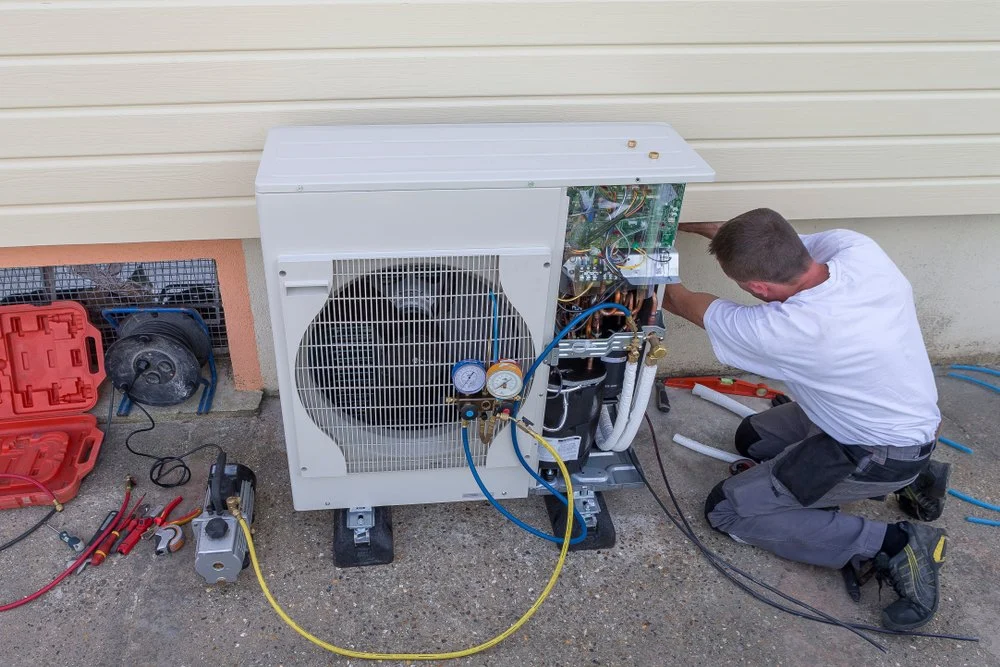
When your AC is not cooling properly, it’s usually due to one of several common problems: dirty air filters, refrigerant leaks, thermostat issues, frozen evaporator coils, compressor failures, electrical problems, or blocked condenser units. Many of these issues can be fixed with simple DIY solutions like changing filters or clearing debris around your outdoor unit. However, more complex problems like refrigerant leaks or compressor failures require professional AC repair. The good news is that regular maintenance can prevent most cooling problems and extend the life of your air conditioning system.
Table of Contents
| AC Problem | Possible DIY Fix | When to Call for AC Repair |
|---|---|---|
| Dirty air filter | Replace filter (every 1-3 months) | If airflow remains poor after replacement |
| Thermostat issues | Check settings, replace batteries | If recalibration is needed or the thermostat is faulty |
| Blocked outdoor unit | Clear debris (2ft clearance) | If the unit is damaged or making unusual noises |
| Frozen coils | Turn off AC, let thaw, check filter | If freezing recurs after a filter change |
| Refrigerant leak | None (requires professional) | Always call a professional |
| Compressor issues | None (requires professional) | Always call a professional |
| Electrical problems | Check circuit breakers | If breakers keep tripping or any wiring issues |
Dirty Air Filters: The #1 Cause of Poor Cooling
Dirty air filters are the most common reason why your AC isn’t cooling well. When filters get clogged with dust and dirt, they block airflow through your system. This makes your AC work harder but cool less effectively.
Think of your air filter like a straw. When it’s clean, air flows through easily. But if you stuff the straw with cotton, hardly any air gets through. That’s what happens with a dirty filter.
How to Fix Dirty Air Filters
Fixing this problem is simple and cheap:
- Turn off your AC system
- Locate your air filter (usually in the return air duct or at the indoor unit)
- Remove the old filter
- Install a new filter with the same size and type
- Make sure the arrows on the filter point toward the unit
For best results, change your filter every 1-3 months. If you have pets or allergies, you might need to change it more often. This simple AC repair task can improve cooling by up to 15% and lower your energy bills too!
Refrigerant Leaks: When Your AC Runs Low on “Cooling Juice”
Refrigerant is the special fluid that actually creates the cooling effect in your air conditioner. If your system is low on refrigerant, it can’t cool your home properly. Unlike gas in a car, AC systems don’t “use up” refrigerant. If levels are low, it means you have a leak.
Signs of a refrigerant leak include:
- AC blowing warm air even with a clean filter
- Hissing sounds from your indoor unit
- Ice forming on the copper lines or the outdoor unit
- Higher than normal electric bills
Why Professional AC Repair Is Needed for Refrigerant Issues
Refrigerant leaks always require professional air conditioning repair. This isn’t a DIY job because:
- Refrigerant can be harmful if handled improperly
- Special equipment is needed to find and fix leaks
- Only licensed HVAC technicians can legally buy and handle refrigerant
- The system needs to be recharged with the exact right amount
A good HVAC repair technician will find the leak, fix it, and then recharge your system with the correct amount of refrigerant. This will restore your cooling power and prevent damage to your compressor.
Thermostat Problems: When Your AC’s “Brain” Gets Confused
Sometimes the problem isn’t with your AC unit at all—it’s with the thermostat that controls it. Your thermostat is like the brain of your cooling system. When it’s not working right, your whole system gets confused.
Common thermostat issues include:
- Incorrect temperature settings
- Dead batteries
- Thermostat placed in direct sunlight or near heat sources
- Thermostat needs calibration
- Wiring problems
Simple Thermostat Fixes You Can Try
Before calling for AC service, try these simple fixes:
- Check that your thermostat is set to “cool” mode
- Make sure the temperature setting is at least 5 degrees below room temperature
- Replace the batteries if you have a battery-powered model
- Clean any dust inside the thermostat carefully
If your thermostat is old or continues to cause problems, replacing it with a newer model can be a cost-effective AC repair. Modern programmable or smart thermostats can also help save energy and improve comfort.
Frozen Evaporator Coils: When Your AC Turns Into an Ice Maker
It might sound strange, but air conditioners can actually freeze up, even on the hottest days. The evaporator coil inside your indoor unit can develop ice, which blocks airflow and prevents cooling.
Frozen coils usually happen because:
- Airflow is restricted (often due to dirty filters)
- Refrigerant levels are low
- The blower fan isn’t working properly
- The system is running when it’s too cold outside
How to Fix Frozen Evaporator Coils
If you suspect frozen coils, here’s what to do:
- Turn off your AC completely
- Change your air filter if it’s dirty
- Let the system thaw completely (this can take 24 hours)
- Turn the fan setting to “on” but keep cooling “off” to help speed up thawing
- Once thawed, restart your system
If your AC freezes up again after trying these steps, you likely need professional HVAC repair. The problem could be a refrigerant leak or another issue that requires specialized tools and knowledge.
Compressor Problems: When Your AC’s Heart Stops Pumping
The compressor is like the heart of your air conditioning system. It pumps refrigerant through the system, making the cooling process possible. When the compressor fails, your AC won’t cool at all.
Signs of compressor problems include:
- AC unit that hums but doesn’t start
- Circuit breakers that trip when the AC tries to start
- Outdoor unit that vibrates excessively when running
- AC that starts but then shuts off quickly
- Warm air coming from vents
Why Compressor Issues Need Professional AC Repair
Compressor problems almost always require professional air conditioning repair. These complex components are expensive and difficult to fix. A qualified HVAC repair technician can:
- Test the compressor to confirm it’s the problem
- Check if repair is possible or if replacement is needed
- Determine if it’s better to replace just the compressor or the entire outdoor unit
- Ensure proper installation to prevent future problems
Regular maintenance can help prevent compressor failures. Having annual AC service can catch small issues before they damage your compressor.
Electrical Problems: When Your AC Won’t Even Turn On
Sometimes the problem isn’t with the cooling components at all, but with the electrical system that powers them. Electrical issues can range from simple problems like tripped circuit breakers to more complex wiring failures.
Common electrical problems include:
- Tripped circuit breakers or blown fuses
- Faulty contactors or capacitors
- Damaged wiring
- Failed control boards
- Power supply issues
Safe DIY Electrical Checks
You can safely check a few electrical issues yourself:
- Check your circuit breaker panel for tripped breakers (look for switches that aren’t fully in the “on” position)
- Make sure your AC is plugged in (for window units)
- Check that the emergency shut-off switch near the outdoor unit is on
For any other electrical issues, it’s best to call for professional AC repair. Electrical problems can be dangerous and require specialized knowledge and tools to fix safely.
Blocked Condenser Unit: When Your Outdoor AC Can’t Breathe
Your outdoor AC unit (the condenser) needs good airflow to work properly. When it’s blocked by dirt, debris, or plants, it can’t release heat effectively. This makes your entire system less efficient.
Common blockage issues include:
- Leaves, grass clippings, or debris around the unit
- Plants growing too close to the unit
- Dirt and grime on the condenser coils
- Items stored too close to the unit
- Bent fins on the condenser
How to Clear Your Outdoor AC Unit
Keeping your condenser clear is easy:
- Turn off the power to the unit at the breaker box
- Remove any debris within 2 feet of the unit
- Trim back plants to maintain at least 2 feet of clearance
- Gently clean the outside of the unit with a garden hose (not a pressure washer)
- Straighten any bent fins with a fin comb tool
This simple maintenance can improve cooling efficiency by up to 30% and help prevent the need for costly AC repair. For heavily soiled units, consider professional AC service for a thorough cleaning.
Ductwork Issues: When Cool Air Gets Lost on the Way
Even if your AC unit is working perfectly, problems with your ductwork can prevent cool air from reaching your rooms. Leaky or blocked ducts can waste up to 30% of your cooling energy.
Signs of duct problems include:
- Some rooms are much warmer than others
- High energy bills despite normal usage
- Visible dust around your vents
- Ducts that make rattling or whistling noises
- Rooms that never seem to get comfortable
Ductwork Solutions
Some duct issues have simple fixes:
- Make sure all vents and registers are open and unblocked
- Check that furniture isn’t blocking airflow from vents
- Look for obvious disconnected ducts in accessible areas like attics
- Clean return air grilles that may be clogged with dust
For more serious duct problems, professional HVAC repair is recommended. A technician can test your ducts for leaks, seal them properly, and ensure they’re sized correctly for your home.
Frequently Asked Questions About AC Not Cooling
How long should I wait after turning on my AC before it starts cooling?
Your AC should start blowing cool air within 10-15 minutes of turning on. The time it takes to actually cool your home depends on many factors, including outside temperature, home size, and AC capacity. On very hot days, it might take several hours to reach your desired temperature.
Why does my AC run constantly but never reaches the set temperature?
If your AC runs constantly without reaching the set temperature, it could be undersized for your home, have a refrigerant leak, dirty coils, or ductwork issues. It might also happen on extremely hot days when your system simply can’t keep up with the heat load.
How often should I have my AC serviced to prevent cooling problems?
For best performance and to prevent the need for emergency AC repair, have your system professionally serviced once a year, ideally in spring before the cooling season begins. Regular maintenance can catch small issues before they become big problems.
Is it normal for my AC to make some noise when it’s running?
Some noise is normal, like a gentle humming or the sound of air moving through vents. However, loud banging, screeching, grinding, or clicking noises are not normal and usually indicate a problem that needs professional air conditioning repair.
How much does professional AC repair typically cost?
The cost of AC repair varies widely depending on the problem. Simple fixes like replacing a capacitor might cost $150-300, while major repairs like replacing a compressor can cost $1,500 or more. Getting regular maintenance can help avoid these costly repairs.
When to Call a Professional for AC Repair
While some AC problems have DIY solutions, others require professional help. Here’s when to call for expert HVAC repair:
- When you’ve tried the simple fixes and your AC still isn’t cooling
- If you hear unusual noises like grinding, screeching, or banging
- When your AC is leaking water inside your home
- If you smell burning odors coming from your AC
- When your circuit breaker trips repeatedly
- If your energy bills suddenly increase dramatically
- For any refrigerant-related issues
Professional AC service technicians have the training, tools, and experience to diagnose problems quickly and fix them correctly the first time. This can save you money in the long run by preventing further damage to your system.
Keeping Your Cool: Prevention Is Better Than Repair
The best way to deal with AC cooling problems is to prevent them in the first place. Regular maintenance is much cheaper than emergency AC repair and helps your system last longer.
Simple preventive steps include:
- Changing air filters regularly (every 1-3 months)
- Keeping the outdoor unit clean and free of debris
- Having annual professional maintenance
- Using a programmable thermostat to reduce strain on your system
- Keeping blinds closed during the hottest part of the day
By taking care of your AC system, you can enjoy reliable cooling and avoid the discomfort and expense of unexpected breakdowns.
Stay Comfortable With Professional AC Repair
When your AC isn’t cooling properly, it can make your home uncomfortable and increase your energy bills. The good news is that many common cooling problems have simple solutions you can try yourself.
For more complex issues like refrigerant leaks or compressor problems, professional help is just a phone call away. A qualified HVAC technician can quickly diagnose the problem and get your system back to peak performance.
Don’t suffer through another hot day with an AC that’s not cooling properly. Contact Noland Heat and Air today to schedule your AC repair appointment and restore comfort to your home. Our experienced technicians are ready to solve your cooling problems quickly and efficiently.